

 Image 1 of 3
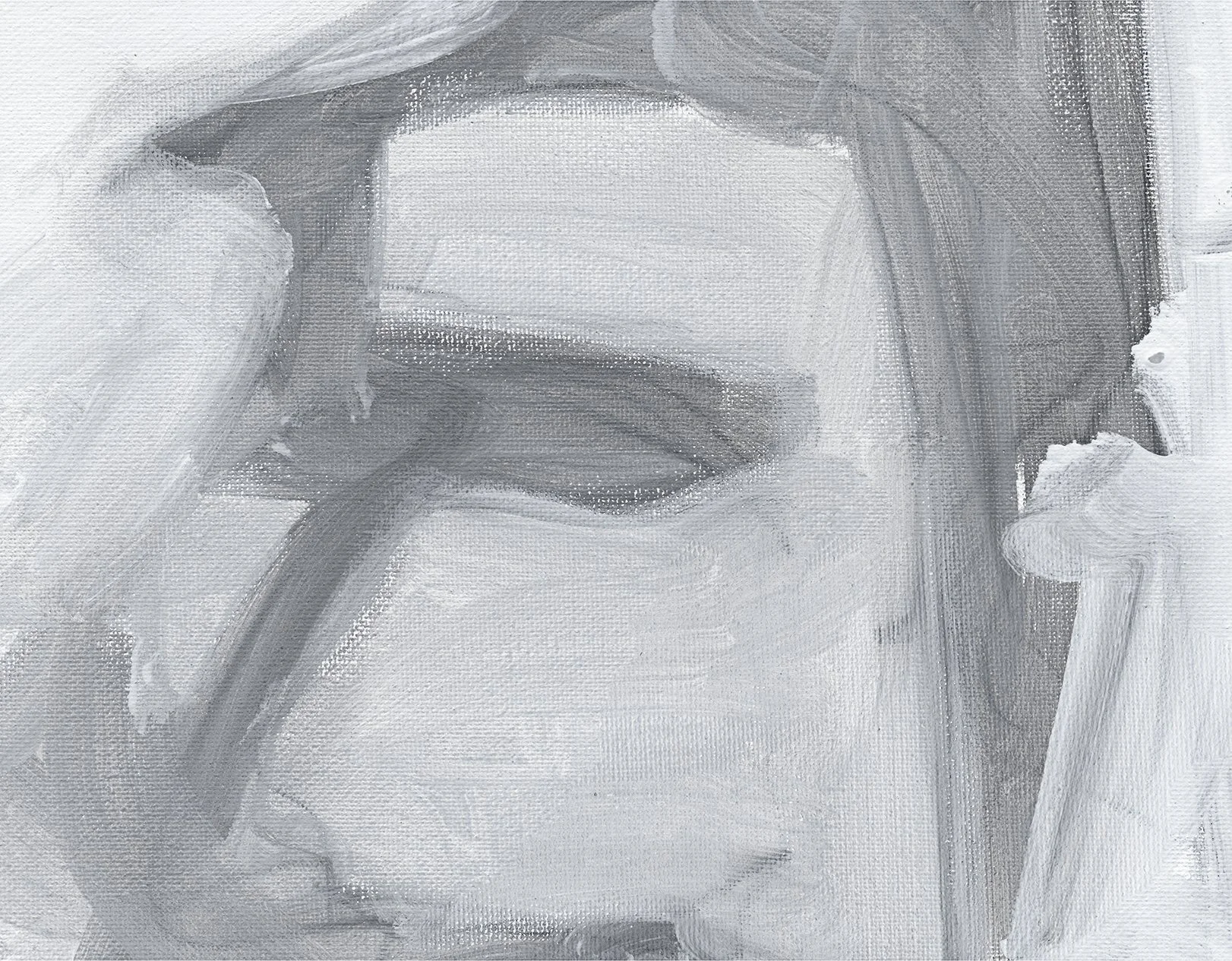 Image 2 of 3
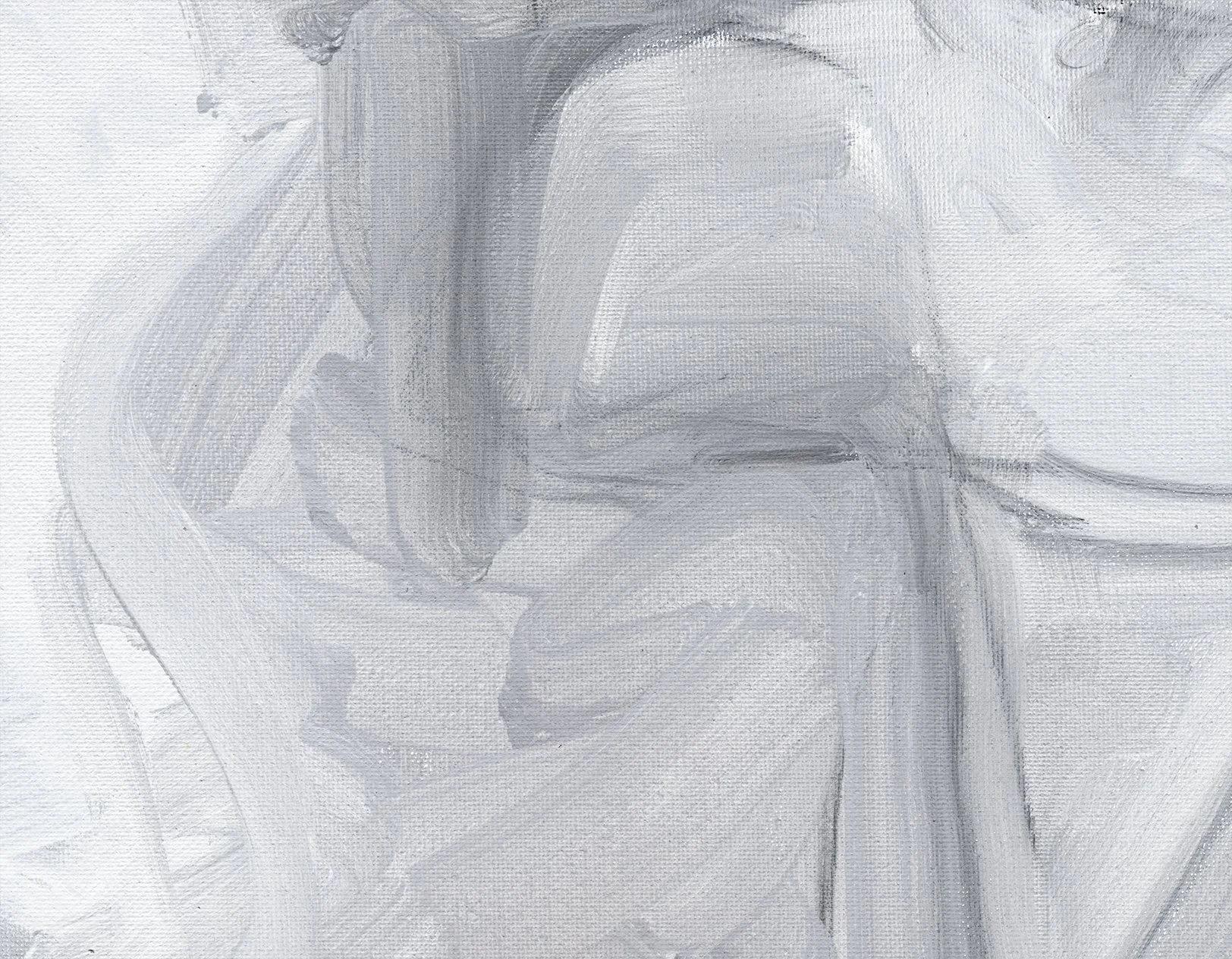 Image 3 of 3
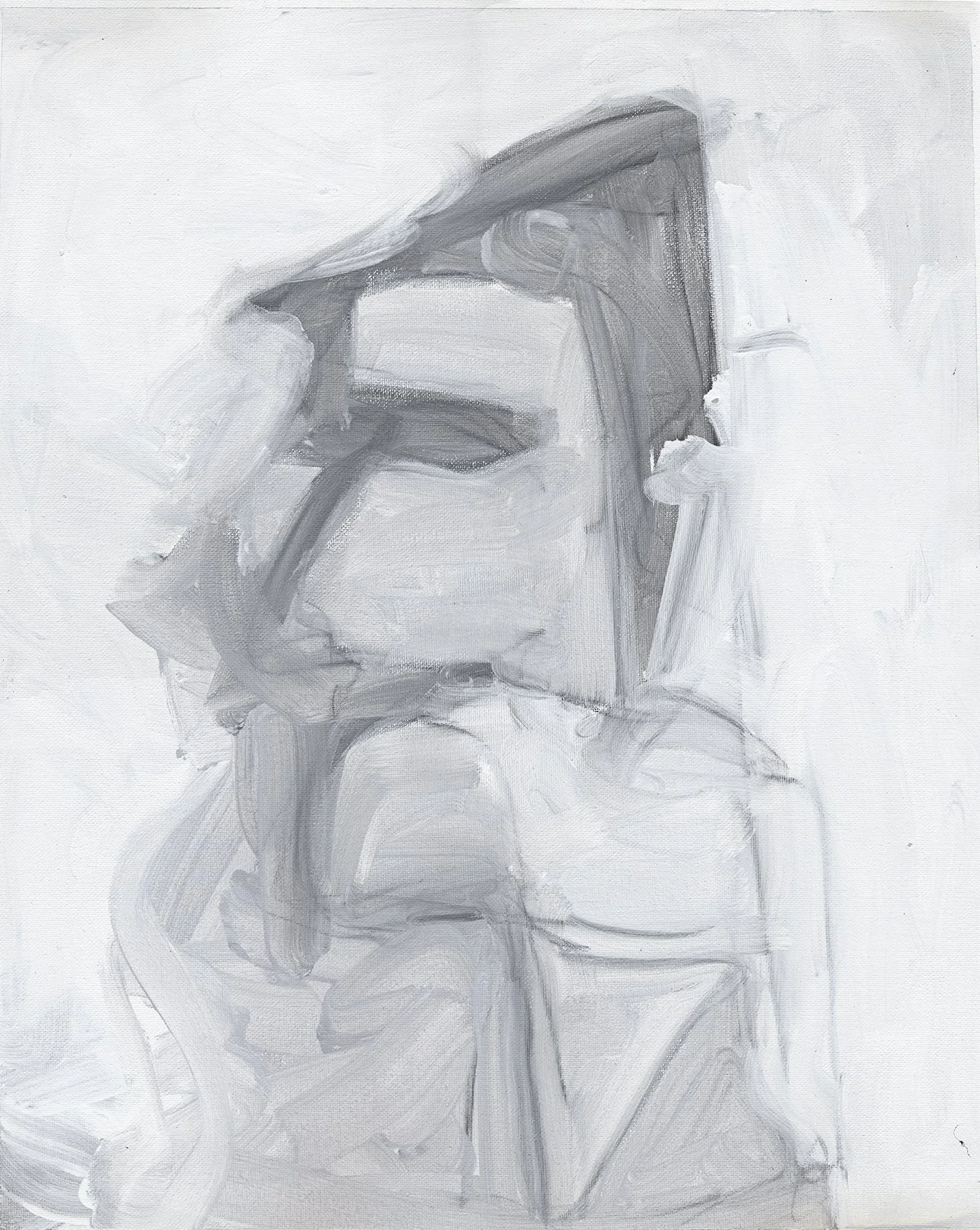
This 16"x20" Oils, Acrylics on Canvas painting by Stephen Stocklin features a contemplative figure rendered in delicate washes of gray and white, with one hand raised to the face in a gesture of introspection or weariness. The form is loosely defined through tonal variations and gestural brushwork, creating an ethereal, almost spectral quality. The figure's posture suggests vulnerability or deep thought, with the head bowed and features barely articulated. Pale, translucent layers build subtle depth while maintaining an overall sense of dissolution into the white ground.
The painting evokes the weight of solitude and reflection—those private moments when we hold our own burdens, when thought becomes so heavy it requires physical support. The near-transparency of the figure suggests how we can feel ourselves disappearing under the pressure of contemplation, reminding us that to think deeply is sometimes to become less solid, to dissolve temporarily into the questions we carry until we emerge again, reconstituted by whatever answers we find.
This 16"x20" Oils, Acrylics on Canvas painting by Stephen Stocklin features a contemplative figure rendered in delicate washes of gray and white, with one hand raised to the face in a gesture of introspection or weariness. The form is loosely defined through tonal variations and gestural brushwork, creating an ethereal, almost spectral quality. The figure's posture suggests vulnerability or deep thought, with the head bowed and features barely articulated. Pale, translucent layers build subtle depth while maintaining an overall sense of dissolution into the white ground.
The painting evokes the weight of solitude and reflection—those private moments when we hold our own burdens, when thought becomes so heavy it requires physical support. The near-transparency of the figure suggests how we can feel ourselves disappearing under the pressure of contemplation, reminding us that to think deeply is sometimes to become less solid, to dissolve temporarily into the questions we carry until we emerge again, reconstituted by whatever answers we find.